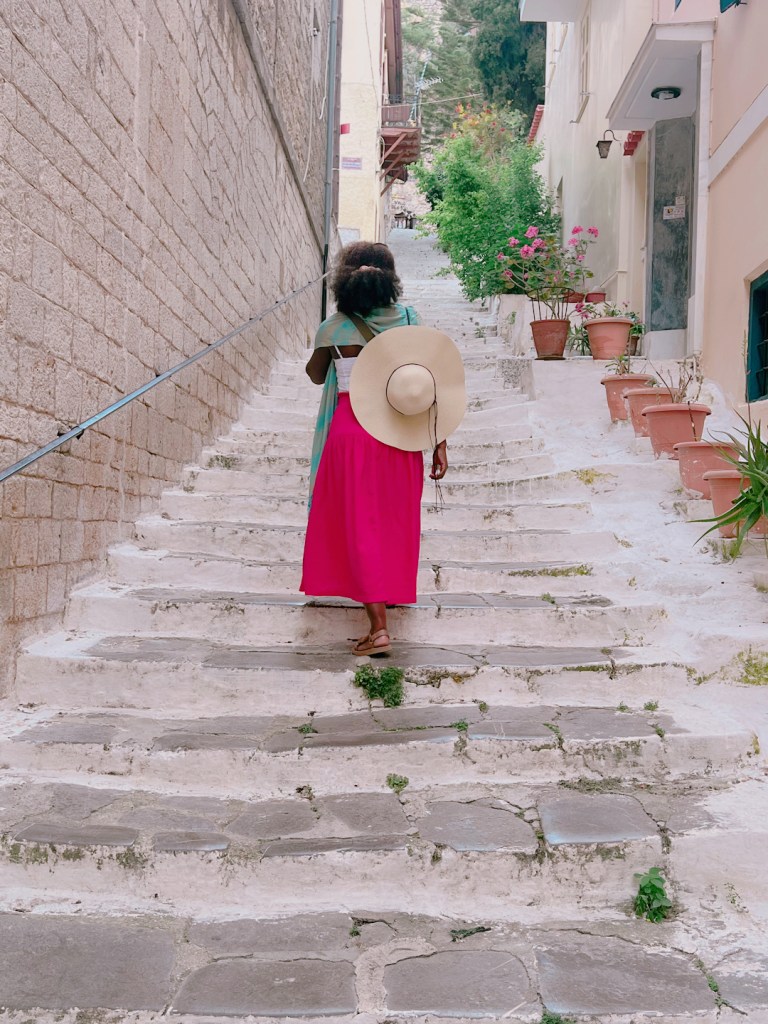
I was both nervous and excited about my first trip to Athens, Greece. I consider myself an adventurer, but ten days alone in a foreign country—living among locals with only a basic understanding of the language—was still a stretch, even for me. And yet, I did it.
There is something deeply necessary about spending time alone, reflecting on oneself. When I first arrived, the adjustment was real. Being alone in a new place always is. But after a few days, I found my rhythm. As my departure from Athens began to approach, I realized my feelings about the city had changed.
My first impression of Athens was jarring. It felt like the New York of Greece—old, gritty, fast-paced, layered with graffiti. And yet, beyond that initial shock, there was no true comparison to any American city. Athens felt like a crossroads: part Portugal, part Italy, and something that reminded me—unexpectedly—of North Africa. At times, it felt like a Christian settlement nestled within the Middle East. I still can’t fully articulate it, but Athens is layered in a way that defies easy labels.
What I came to understand is this: Athens must be experienced slowly. You cannot fall in love with it in a weekend. It needs time to reveal itself.
At one point, I was ready to leave—if I’m being completely honest, that feeling surfaced after dropping my husband off at the airport. Loneliness has a way of amplifying discomfort. But as I began to reflect, I started noticing what had quietly taken root.
I loved how my body responded to the Mediterranean diet—fresh vegetables, fruit, simple foods prepared with care. My digestion felt balanced in a way it hadn’t in a long time. I loved the absence of road rage. Greeks are aggressive drivers, yes—I was terrified to drive my rental car in the city center—but there was a patience and compassion on the roads that I rarely witness in the United States.
I loved that I could get my nails done for a fraction of the cost back home. I loved that once you stepped away from tourist traps, you could enjoy local cuisine—real, soulful food—at prices that felt humane. I loved how grateful people were when I tried to speak Greek, even imperfectly.
Most of all, I loved the Greek people.
They are warm, kind, and deeply hospitable in a way that feels genuine, not performative. They do not rush emotional connection. They allow it to unfold.
I didn’t cry on the plane home the way I did when I left Italy, but Greece touched me in its own quiet way. The best comparison I can make is this: arriving in Athens feels like carrying a heart hardened by candle wax. And once the people here light that candle to your soul, the warmth slowly begins to melt you—softly, patiently, and completely.
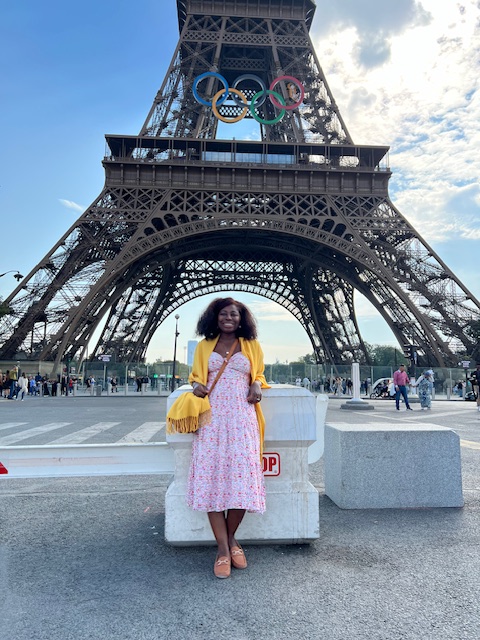
On a recent trip to the Netherlands to visit family, we thought it would be a great idea to spend a few days in Paris. Oddly enough, I’ve been to Europe multiple times, visited countries bordering France, and even run a blog with a French title—but I had never actually been to France.
If you’ve read any of my other articles, you already know that I studied French and have an ongoing love affair with the language. While I’ve long been obsessed with the idea of visiting southern France, I wasn’t particularly interested in Paris for several reasons.
I’d heard mixed reviews about the City of Love, and most weren’t exactly glowing. Even my husband said Parisians were horrible to him and his Dutch buddies when they visited in their early twenties. Beyond the reputation of the “rude Parisian,” I’d also heard the city was tiny, dirty, and smelled. (To be fair, all Americans call European cities tiny.) But even some Europeans warned me to be wary of Parisians.
Despite the grumblings of travelers before me, I decided to give Paris a fair shot. So, we loaded up the SUV—probably our first mistake, considering we were driving into Paris with luggage—and made the six-hour trek from the Netherlands through Belgium into France.
When I finally saw the Bienvenue en France sign, I was elated. It felt like I was finally meeting an online lover I’d known for years but never experienced in person. Armed with my high-school French grammar, a pocket phrasebook, and a translation app for backup, I was ready to meet Monsieur France.
Well… I didn’t meet him immediately, but I did encounter a grumpy old French woman at a border-town gas station who made fun of me when I asked, in French, if she spoke English. She was already irritated—by the British gentleman ahead of me, the long fuel lines, and all the non-French people she had to deal with.
At first, I hesitated to speak in my broken French, thinking it would only make things worse. But mes amies, let me tell you—the French have endless patience if you speak to them in their own language. I quickly switched to French, told her our pump number, how much we wanted to pay, and even bid her an au revoir on the way out.
TAKE THAT, mean old French lady!
My husband, who can’t speak a lick of French, stayed silent through the entire ordeal but patted me on the back on the way out. “Good job, honey,” he said.
When we finally reached Paris, I knew exactly what to do: speak exclusively in French and wait for Parisians to switch to English. It worked like a charm.
To my surprise, I found Paris charming—not in a warm and fuzzy way, but in a New-Yorker-with-a-French-air kind of way. Parisians have a hard exterior. They’re busy, blunt, and rarely smiling on the streets. If I’m honest, there’s a subtle battle of the alphas energy in the air. Add a language barrier, and things can feel intense and overwhelming. But for me, the challenge was refreshing and exhilarating.
Every French person I interacted with greeted me with poise, calm, and respect. (According to my husband, some even flirted—but that’s still up for debate. I insist they were just being nice.) I was even told that my French accent was great—and I’m still giddy in an ooh-la-la way after hearing that.
If only my high-school French teacher could have witnessed that monumental moment! She would have had no choice but to call me Jacqueline—the French name I had chosen in ninth grade. But she refused, insisting that I already had a beautiful French name and didn’t need another one like the other students. I was furious! I mean, Jason became Jean, Erin became Élise, Amy became Amélie… so why couldn’t I be Jacqueline?
Okay, I digress. Old wounds, mes amies—old wounds. 😆
Anyway, let’s just say I handled Paris like a champ. I ordered food in French, spoke to a boulangerie manager in French when my husband lost his wallet, and even asked for help at the grocery store—in French—when I needed to buy tampons.
Ah yes… the tampon story. Let’s rip that bandage off now.
We had just left the boulangerie—not the one where my husband lost his wallet, but another one (you’ll go to a lot of bakeries in France, trust me). If you ever make it to Paris, check out Leonie—no one, and I mean no one, makes pastries like the French.
But I digress again. Back to the humiliation.
My husband’s hands were full of bags, and since he doesn’t speak French, he didn’t want to enter another store carrying goods from elsewhere, afraid he’d be scolded. I assured him my limited French could handle any disagreement, but he insisted I go into Carrefour alone.
So I did.
I grabbed my tampons—and that’s when everything started going sideways. First, I couldn’t find the checkout line. When I finally did, I realized it was self-checkout. Not the simple kind we have in the U.S., but a full-blown French operation: ten lanes, a floor attendant barking directions, and assistants helping other customers navigate the process.
I started sweating. I remembered that in Turkey’s Carrefour, you needed a value card before paying. “Oh God,” I thought, “do I have to fill out an application just to buy tampons?”
I considered leaving the line to ask someone but didn’t want to lose my spot. As I inched forward, panic set in again. The man in front of me looked intimidating—like a mean New Yorker with a French aura. I probably stared at the back of his head for ten minutes, and I swear he could feel my eyes burning into him.
So I turned around to ask the “woman” behind me for help—only to realize it was a young Frenchman. There I stood, tampons in hand, staring at him until I finally asked, in French, whether I needed a Carrefour card.
He misunderstood and said yes. My heart dropped. Then he laughed and switched to perfect English. Oh, thank God, I said—possibly in French. Turns out, I had asked if they accepted credit cards, not store cards.
We both burst out laughing and ended up chatting about everything under the sun. When it was finally my turn to check out, I asked Monsieur French if he’d come with me to the register—because, let’s be real, my French isn’t that good. Who knew what kind of questions the machine might throw at me about coupons or loyalty points?
He happily helped me, and after I paid, I thanked him profusely and bid him farewell.
So, mes amies, the moral of the story is this: Parisians are actually very kind—if you remember to say “Bonjour,” don’t assume they speak English, and make an effort to speak French.
The next time someone tells you the French are mean, don’t believe it. I have a box of tampons to prove otherwise. 🩷
Until next time mes amies, Stay young, stay curious & stay true, Je suis JaTon

 Je suis JaTon