The Cage

By: JaTon Kılınç

After pacing back and forth in the little metal box, I grew tired and weary. Walking to the edge of the cage, I grabbed the bars tightly. They were cold to the touch, but I held on. Frustrated and bored, I shook them — not too hard, but enough — and that was when I realized it was not even locked.

The gate creaked softly as I pushed it open. Glancing across the hall, I saw a friend staring back at me from behind their own bars. I nudged the gate a little farther, but did not step out. Instead, I looked up at my friend, waiting for some kind of explanation. They only shrugged but did not move.

Peeking my head out, I looked down the hall and saw others in their cages too — some hacking away on computers, others sharing coffee breaks with their neighbors, all within their little boxes. No one noticed that I had opened my gate.

It was then that I decided to step out. My feet touched the cold floor, and it felt strange, uncomfortable even. My cage, despite its bars, had soft, plush flooring inside. After a few hesitant steps, I realized I was free — out of the cage.

I turned around and stood in front of my friend’s cage. “Try your gate,” I said. He shook his head. My eyes welled with tears. We were not the closest of friends, but we had grown to like each other, and I felt guilty leaving him behind. Yet he was too afraid. So I turned and began to walk.

As he realized I was not coming back, he shouted after me.
“JaTon, what are you doing?”
“Uhh… I’m getting out of here, and if you were smart, you’d do the same thing.”

He had often complained about his aches, pains, and workload, but he was too scared to move. I recalled a speech he had once given me about the importance of playing it safe. So I left him sitting in his cage.

A few family members and friends glanced at me through their bars in amazement, yet none dared to test their own gates. I just kept going. The momentum had built, and there was no turning back.

Mes amies—this is what it feels like to leave the “nine-to-five, let-me-pay-bills” drudgery. Many of us go through life never even bothering to see if the door is unlocked.

All right, I admit my little analogy may be far-fetched, but it is exactly how it feels. When I stepped off that plane and landed in the Middle East, a part of me thought, Oh sh&! I actually did it.* To be honest, it was not that hard. It only required some planning.

Too often, I read travel forums and watch YouTube videos where people—usually Westerners, I’m sorry to say—want to know the “secret” to living life on their own terms. They ask how much to save, what jobs to apply for, who to contact in a new country—or even just in a city a few states away.

Where are the critical thinking skills we spent decades developing? Did we all endure over twenty years of schooling, not to mention four-year degrees, only to forget how to think for ourselves?

Do we really need the strict hours of a job dictating each day—telling us when to eat, when to rest, when to take a break? Must we be told when to get up, go to bed, and take a day off?

I confess that I, too, once lived that way. But the truth is, there is no magic formula. Everyone’s path is different.

Many will not want to hear this—I certainly did not—but the reality is this: it is all about mindset. It is a mind shift. A change in perspective. A decision. Let me repeat that—it is just a decision.

It took getting away from the chaos and noise for me to have that “aha moment.” There are, of course, steps you can take to make the transition easier. I will be the first to say that networking makes everything smoother, both during the planning stages and once you are on the ground.

Most of us who packed our bags and tried something new were not millionaires. We did not have massive savings. The boldest among us did not even have jobs waiting. Some of us had structured plans; others were more fluid. What we all had in common was that we decided to break out of the self-contained cage and live on our own terms.

We got fed up.

Somehow, the universe rewards that kind of courage. Things start to align. Answers reveal themselves.

I will admit that there are moments when I tell myself that my back-up, back-up, back-up plan is to return to my old life if I ever grow restless. Yet a small voice inside reminds me that I never will—because I could never go back to trading time for money.

When I scroll through social media and see ex-colleagues posting photos of cubicles or joking about their “small prison breaks,” I cringe. It is impossible to go backward once you have tasted freedom.

I am not talking about a two-week vacation. I have taken that ten-day break before, and yes—it feels incredible for the first few days. Yet by day six or seven, your mind starts shifting back to work—the emails piling up, the unfinished projects waiting for you. You only truly enjoy a handful of days, because you know you are the only one on that “cell block” (a.k.a. job) assigned to scrub that metaphorical pot or mop that figurative floor.

All right, mes amies, I know—I am exaggerating again. I would never clean anyone’s toilet but my own (and I hate that too). Yet you understand my point. It is a metaphor for the job no one wants but someone must do, because you were hired to do it.

No one else wants to take the blame if it is not done right. I blame that partly on our education system. We are not trained to be collaborators; we are trained to be competitors. We are taught to mildly tolerate one another’s presence—but not to truly work together.

Je suis désolé, mes amies (I told you I cannot stay away from Mr. French, lol). Anyway, I am rambling again. Perhaps I have revealed too much—now you know what my expat friends and I discuss over countless glasses of wine in the afternoons.

It is oddly therapeutic to vent about our old work nightmares: mean bosses, cutthroat colleagues, nonexistent sick days, catty coworkers, entitled executives, those infamous “look-busy” afternoons—the list goes on. I think a few tears were shed during those conversations. Mine certainly watered just writing this.

Who needs therapy when you have friends like us? (Kidding… mostly.)

The truth is, I rarely think about those office days anymore, except when I see an occasional post or when I feel inspired to write about my past life on a sunny afternoon like this. It feels like something that happened in another lifetime.

I am literally too busy enjoying paradise.

Still, I cannot believe I just pushed that gate open and walked out.

If any of you have broken free from your own cages, drop me a line or two. I would love to hear your stories—and who knows, if yours is compelling enough, I might just invite you to one of our late-night expat wine sessions. Hehehe.

Until next time my friends,
Stay young, stay curious & stay true
Je suis JaTon

Please Tell Me…Why the “BLEEP” Am I Studying French in Turkey…

By: JaTon Kılınç

The first and most obvious reason is simple: I’m crazy, lol.

The other night, just as I was winding down for bed, I could not remember how to say “I’m sorry” in Turkish. It was right on the tip of my tongue, yet the only thing that came out was Je suis désolé—“I’m sorry” in French. Panic set in immediately. How could this be? I had just told the immigration officer how sorry I was for being a few minutes late to my residency appointment, and only the other day I had apologized to my husband—aka “teddy bear”—after he had a rough day at the office. Surely, I had memorized that phrase.

I was convinced it was as solid in my brain as the number nineteen in French, which, thanks to my ninth-grade classmates, I have never forgotten. A few of the boys in class decided to turn dix-neuf into “these nuts” whenever the teacher made us count aloud. Because the words sounded similar, the teacher never caught on, but the entire class laughed every single time. My American readers will likely understand what I mean by this. To this day, whenever I count in French, I can still hear those mischievous voices echoing in my head.

Mes amies, I had to immediately kick “Mr. French” out of my mental bed and go chasing after my Turkish lover in the recesses of my mind. My fingers itched to grab one of my phrase books or my translator, but I refused to give in. I knew that if I tried hard enough, I could remember. After all, a girl should never forget how to ask for help, apologize, or—dare I say—beg in a foreign language. Those are some of the most important tools in the linguistic toolbox.

Finally, the phrase came rushing back to me like a freight train, and relief washed over me. Looking back, it is ridiculous how paranoid I was about “losing my touch” with Turkish.

When I packed my luggage, I thought nothing of bringing nearly every French book I owned. I even subscribed to weekly emails from Frédéric at Talk in French to study both languages simultaneously. (He is wonderful, by the way. This is not a paid advertisement—just genuine appreciation for great content.)

However, the problem is clear: these two languages could not be more different. They belong to entirely different language families and are structured worlds apart. Both use the Latin alphabet, but each conjures a completely distinct atmosphere—one evokes flour fights and bidets, while the other calls to mind dervish dancers and mosques. Although now that I live in Turkey, I see a few similarities. Both remind me of fresh bread and rich cuisine.

Mes amies, I will tell you this: that night I fell asleep with my Turkish companion close beside me, begging him never to scare me like that again—only after apologizing to “Mr. French” for discarding him so abruptly. I even told Frenchie to stay near; after all, we could always have a quick rendezvous in the morning before coffee.

The real question remains: Why the “bleep” am I studying French in Turkey in the first place, when I should be focusing on mastering Turkish?

It is a fair question. I could not even tell my new spa girl to give me a moment to breathe during my Brazilian wax (ladies, a warning: wax jobs in Turkey are very different from those in America). I literally had to remind myself, “JaTon, woman up—you’ve had a child, for heaven’s sake. You can and will survive this hair removal session.”

Anyway, back to the point. The first and most honest answer is simple: I love French. The second is that I am competitive—extremely competitive, even with myself. I once read that it is possible to learn two languages at once, as long as they are not from the same language family. The author also mentioned that it was not necessarily recommended, but if you give me an inch, I will take a mile. So let us kindly forget that part.

Being an optimist by nature, I decided to go for it.

I can personally attest to why similar languages can cause confusion. During my time in Italy, I kept replying to people in Portuguese, and while visiting my husband’s family in the Netherlands, I once mistook the cartoon characters’ Dutch dialogue for English until my ear caught the familiar guttural sound. Even my husband sometimes slips into Dutch mid-sentence without realizing it.

The third reason I continue studying French is simple: hearing it soothes me. When I hear French on television, it feels like a long-lost friend has joined me in Turkey. When my ears grow tired from the challenge of Turkish, I switch the channel, and I no longer feel like such an outsider. I may not understand every word, but the familiarity comforts me.

It might not be the same as watching Neil deGrasse Tyson explain the solar system on British television at ten o’clock at night, but it still brings me joy. And yes, I admit it—I watched a show on quantum physics with a glass of wine in hand. Let us call that adulting 101.

They say absence makes the heart grow fonder, but I am not so sure that applies to language lovers. Languages can be fickle companions, running off with another the moment your brain gets distracted.

I do not know how long we will stay in Turkey, which is precisely why staying connected to French makes sense. Unlike Turkish, which is primarily useful only within Turkey, French is spoken around the world. Of course, since I am married to a Turk, Turkish is equally essential. How else would I gossip with my mother-in-law? (Just kidding—love you, teddy bear.) Actually, I usually talk about him right in front of her and then ask him to translate what I said, lol.

As I close this week’s post, I would love to hear from you. Have any of you tried juggling more than one language at a time? What tactics do you use to keep both fresh in your mind? Drop me a line or two below. I would love to know how you manage to stay loyal to one language while still keeping the other alive—because, truthfully, I feel like I am on the verge of a linguistic divorce every other day.

Until next time mes amies,
Stay young, stay curious & stay true
–Je suis JaTon

A Day in A Life in Kuşadası, Turkey

By: JaTon Kılınç

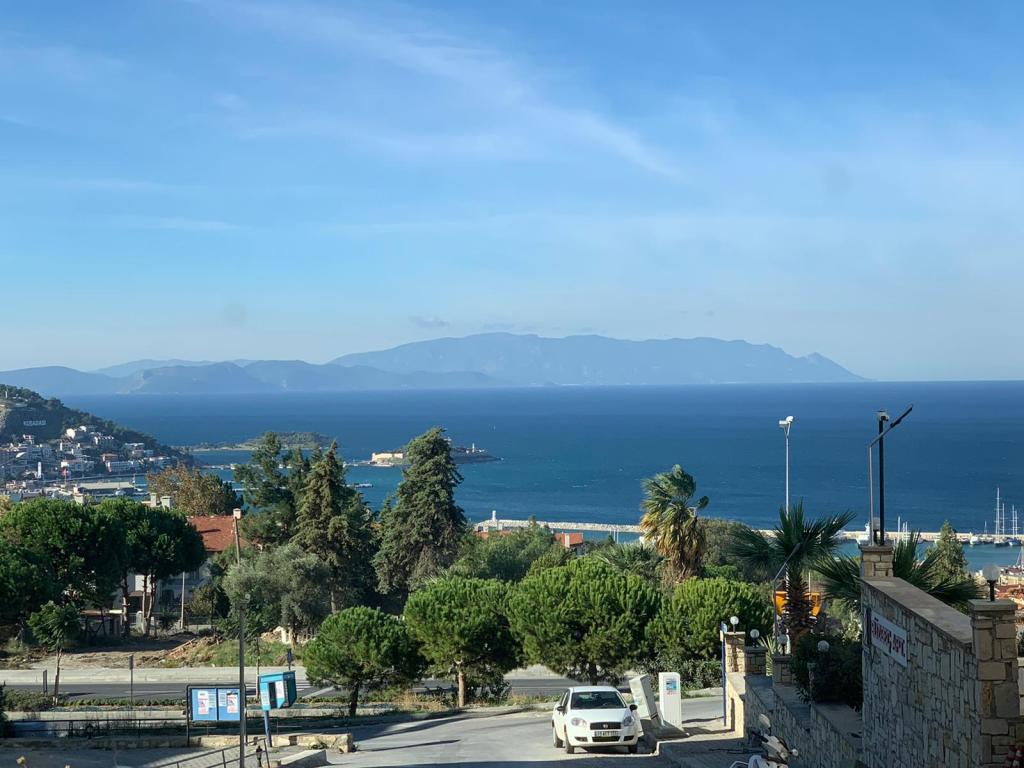
I live on the Aegean Sea, in a resort town built along the cliffs. It’s a bustling yet charming small city with a thriving local community and a steady flow of permanent expats—mainly from Europe, or so I’ve noticed thus far.

There is, however, an American couple who live part-time here, two floors above me. They’ve been coming to Turkey every year for the past eight years. I won’t even tell you how I reacted when I discovered that a fellow American—from Texas, no less—was in my building. Let’s just say it was the emotional equivalent of watching Jesus rise from the dead. Tears filled my eyes, my hands involuntarily formed a prayer, and my knees buckled as I fell to the floor in thanks to the heavens.

Okay, maybe I’m exaggerating a little—but I was thrilled to finally speak English to someone outside my household without getting the “deer in headlights” look after saying “hello.”

But I digress—let’s get back on track, shall we? I wake up every morning to a stunning view of the sea. Once the mist drifts upward, I can even see Greece from my balcony. My mornings are very different now than they were four months ago—and so are my days.

I still begin with a 10–15 minute meditation session, but instead of dragging my feet to get ready for a desk job, I get to decide how I want to spend my day. Let me give you a glimpse by describing today.

Around noon, I took a walk. There are two grocery stores less than a block from my apartment, so I stopped by one to pick up some food on the way back. The shopkeepers are beginning to remember us and grow friendlier each time we visit. The butcher handed me freshly ground beef and said the Turkish equivalent of “bon appétit.” The cashier gave me a small wink and a warm smile as he returned my change.

My daughter has taken a liking to one kitten in particular, so we bought cat food and helped a kind Turkish woman feed the neighborhood strays. It felt good—almost like a small act of community service. When we finished, the woman thanked us both for helping.

Before our walk, one of our neighbors—a sweet seventy-five-year-old man—offered us tea and refreshments at his home. When we politely declined, he handed us fresh fruit instead.

The rest of my day was simple and lovely. I worked on the sequel to my novel, made fresh pasta and sauce from scratch, and ended the afternoon watching the sun sink into the Aegean Sea. My days often begin and end with the sea.

It’s not a glamorous life, but it’s not a hectic one either. No more hour-long commutes in traffic and no more road rage. No more fast food because I was too exhausted to cook. No more filling my mind with political chaos, racial conflict, or celebrity nonsense that adds nothing to my human experience. So, is there anything I miss about home? Of course.

I miss my family and friends.
I miss certain foods.
I miss the ease and convenience that America offers.
I miss hearing English on television without needing subtitles.
I miss American music and being effortlessly understood.
I miss calling home without calculating the seven- or eight-hour time difference, depending on daylight savings.

But overall, my life here is more peaceful.

Here, neighbors speak to me.
Here, people go out of their way to help.
Here, food tastes fresher.
I had almost forgotten what a grape with seeds actually tastes like.

I also love the year-round Mediterranean warmth. Here, I’ve learned to appreciate the simple things—to find joy in both what I’ve gained and what I left behind.

There’s less background noise, which gives me more time to think, reflect, and create. In America, my days were filled with constant noise. I was always rushing, barely finding time to think, let alone pursue my passions.

Weekends were spent cramming in everything I couldn’t finish during the week. My husband and I have been married for less than two years—still newlyweds, really—and yet we barely saw each other back then. We were both too busy surviving the never-ending hamster wheel, that infamous “rat race.”

Now, I have nothing but time.

It’s not perfect—I do get lonely sometimes (check out my article “Lonely in Paradise“)—but it’s life for now, and it’s an experience I wouldn’t trade for the world.