What I Discovered After Living a Life of Leisure

By: JaTon Kılınç

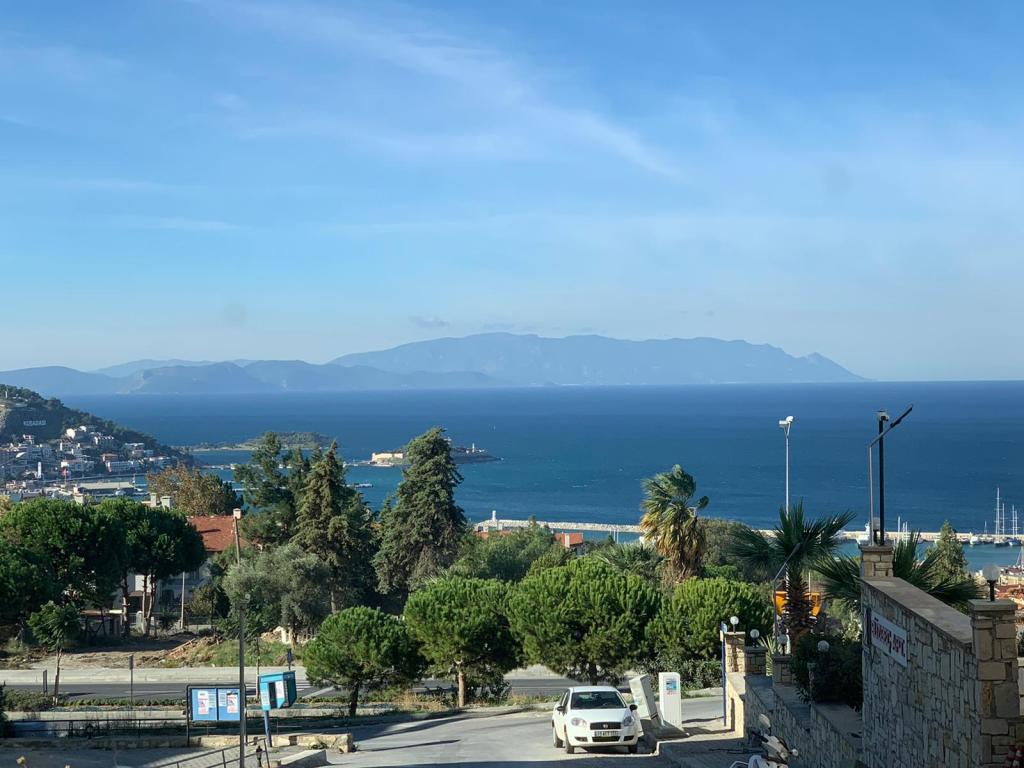
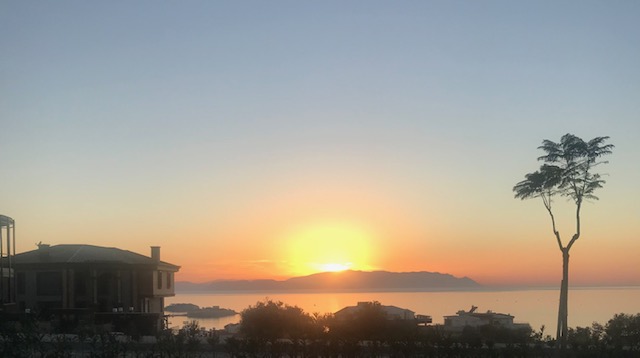
I woke up every day to an amazing view of the sea. I watched beautiful sunsets, drank wine at three in the afternoon—sometimes two if I’m honest (hey, who needs five o’clock when time is your own, right?)—sipped Turkish tea at random hours of the night, and never set an alarm because I didn’t have a job to check into.

In fact, mes amies, the only things I did with any real consistency were brushing my teeth, making the bed, and enjoying a hot cup of coffee around the same time each morning. Alright, I confess—I meditated too, though even that had no schedule.

For instance: if someone at the grocery store made me angry—meditation time. If an irate driver yelled at me in Turkish—meditation time. Basically, any time I was having “a moment,” it was time to light the sage, strike a Buddha pose, and connect with my higher self.

Okay, I’m half-kidding… and getting off track.

When I left my job in the States, the goal was simple: enjoy myself first, then get down to business. We’d traveled overseas with a comfortable cushion, so I didn’t have to worry about bills or food. And thanks to my Turkish husband, residency wasn’t a problem—no need to dodge immigration officers (though I like to think my old high-school track legs could still give them a run for their money).

But slowly, I began to realize something: after so many years in the workforce, I struggled with personal time management and structure.

I don’t mean I couldn’t manage time—I mean I couldn’t manage myself. Give me a project with deadlines and I’ll crush it. In fact, that was always one of my strongest assets at work—I often finished early. (Okay, part of that came from my competitive streak. I like to win.)

When I began this new chapter, I thought having nothing to do would feel amazing. Honestly, I didn’t even remember what that felt like. The last time I could just frolic around the house, I was probably seven.

I’ve always been a free spirit—never one to thrive under rigid structure or the time constraints most corporate jobs demand. The roles I loved most had flexible start times or were fully remote. Yet when I finally had all the time in the world, I didn’t know what to do with it. Not in the dreamy “life-of-leisure” way most of us imagine, anyway.

It had been years since I’d had months off. Years since I’d played an instrument, taken a ballet class, painted, sketched, or even written a novel. There was just no time—between work, motherhood, and now, marriage.

So there I was, surrounded by endless time… and completely lost. I had forgotten what it felt like to do the things I loved. It was like trying to reprogram a brain that had been on autopilot for decades.

Years of schooling and the workforce had trained even a free spirit like me to fall in line with the rest of the herd. When I was working, I lived for the weekends—and by Sunday, I was already miserable knowing I’d have to give up my freedom again on Monday.

So why, now that every day felt like Friday, was I not happy?

I remember telling my daughter I felt like I was trapped in that movie Groundhog Day—living the same day over and over. I might have even flipped off the Mediterranean Sea once in frustration (kidding… mostly). If I did, consider this my official apology to nature.

Eventually, my critical thinking kicked in. I started asking myself, What’s really the problem?

Sure, there were days when I explored—visiting Roman ruins, channeling my inner Indiana Jones—but every day can’t be an adventure. Try telling the one-year-ago version of me that I’d ever get tired of staring at the same ocean—I would have laughed. I would have traded my day job for that life of leisure in a heartbeat. And I bet most of you would, too.

But little by little, the old programmed version of me began to chip away.

I changed my perspective on life. I created my own meaning—one not tied to someone else’s dream. I started doing things that made me happy. I rediscovered the things I loved. I even started to love Mondays.

Mondays became exciting—the start of a new week, the day I might discover something new or rediscover something old.

Before leaving my home country, I’d focused mostly on the financial side of moving abroad. But there’s so much more to it than that. I used to wonder how someone with billions could possibly be bored—but now I understand.

I once heard Kim Kiyosaki say that “money is important because it affects everything that is,” and she’s 100% right. I love money—it’s extremely important—but there’s another side to that coin that must be nourished, too.

Mes amies, the novelty of everything eventually wears off. Don’t believe me? Go to Italy and watch the locals walk past the statues tourists are drooling over. I even experienced it in Turkey: there I was, frantically taking photos, while locals looked on with that bored “another foreigner” expression.

The crystal-clear waters, the sunsets, the rolling hills, the ancient ruins—they all exist to enhance our human experience. But the road can’t stop there, because as humans we must keep growing, expanding, creating.

Now I understand: a life of leisure only works when it’s paired with a life of purpose.

Mes amies, take a moment to reflect—what do you think your life’s purpose is? (I hope that’s not too deep; I might’ve just finished one of those meditation sessions I was telling you about. Hehe.)

P.S.
Stay tuned—because I’ll be traveling to Istanbul soon, and I’m sure something comical will happen. It usually does whenever I’m wandering around Turkey.

Until next time mes amies,
Stay young, stay curious & stay true,
Je suis JaTon

I Was Once a Poet

By: JaTon Kılınç

Born, on a winters day…

Clinging, to my mother’s breath…

I found the light, I found the way…

Lungs were presented instead of death…

This is how, the lyrics were formed,

How life created, my first poem…

I learned to cry, and how to walk…

To be brave, in a world lacking peace…

Examining the trees, I learned they speak…

The wind the sand, the entire land…

Becomes the subject, of the poet

I used to see sunsets, and blue calm…

Now its blistering stars, accompanying moët…

Where am I and where is my song?

Not long ago, I was once a poet…

Until next time my friends,

Stay young, stay curious & stay true

Je suis JaTon

The Cage

By: JaTon Kılınç

After pacing back and forth in the little metal box, I grew tired and weary. Walking to the edge of the cage, I grabbed the bars tightly. They were cold to the touch, but I held on. Frustrated and bored, I shook them — not too hard, but enough — and that was when I realized it was not even locked.

The gate creaked softly as I pushed it open. Glancing across the hall, I saw a friend staring back at me from behind their own bars. I nudged the gate a little farther, but did not step out. Instead, I looked up at my friend, waiting for some kind of explanation. They only shrugged but did not move.

Peeking my head out, I looked down the hall and saw others in their cages too — some hacking away on computers, others sharing coffee breaks with their neighbors, all within their little boxes. No one noticed that I had opened my gate.

It was then that I decided to step out. My feet touched the cold floor, and it felt strange, uncomfortable even. My cage, despite its bars, had soft, plush flooring inside. After a few hesitant steps, I realized I was free — out of the cage.

I turned around and stood in front of my friend’s cage. “Try your gate,” I said. He shook his head. My eyes welled with tears. We were not the closest of friends, but we had grown to like each other, and I felt guilty leaving him behind. Yet he was too afraid. So I turned and began to walk.

As he realized I was not coming back, he shouted after me.
“JaTon, what are you doing?”
“Uhh… I’m getting out of here, and if you were smart, you’d do the same thing.”

He had often complained about his aches, pains, and workload, but he was too scared to move. I recalled a speech he had once given me about the importance of playing it safe. So I left him sitting in his cage.

A few family members and friends glanced at me through their bars in amazement, yet none dared to test their own gates. I just kept going. The momentum had built, and there was no turning back.

Mes amies—this is what it feels like to leave the “nine-to-five, let-me-pay-bills” drudgery. Many of us go through life never even bothering to see if the door is unlocked.

All right, I admit my little analogy may be far-fetched, but it is exactly how it feels. When I stepped off that plane and landed in the Middle East, a part of me thought, Oh sh&! I actually did it.* To be honest, it was not that hard. It only required some planning.

Too often, I read travel forums and watch YouTube videos where people—usually Westerners, I’m sorry to say—want to know the “secret” to living life on their own terms. They ask how much to save, what jobs to apply for, who to contact in a new country—or even just in a city a few states away.

Where are the critical thinking skills we spent decades developing? Did we all endure over twenty years of schooling, not to mention four-year degrees, only to forget how to think for ourselves?

Do we really need the strict hours of a job dictating each day—telling us when to eat, when to rest, when to take a break? Must we be told when to get up, go to bed, and take a day off?

I confess that I, too, once lived that way. But the truth is, there is no magic formula. Everyone’s path is different.

Many will not want to hear this—I certainly did not—but the reality is this: it is all about mindset. It is a mind shift. A change in perspective. A decision. Let me repeat that—it is just a decision.

It took getting away from the chaos and noise for me to have that “aha moment.” There are, of course, steps you can take to make the transition easier. I will be the first to say that networking makes everything smoother, both during the planning stages and once you are on the ground.

Most of us who packed our bags and tried something new were not millionaires. We did not have massive savings. The boldest among us did not even have jobs waiting. Some of us had structured plans; others were more fluid. What we all had in common was that we decided to break out of the self-contained cage and live on our own terms.

We got fed up.

Somehow, the universe rewards that kind of courage. Things start to align. Answers reveal themselves.

I will admit that there are moments when I tell myself that my back-up, back-up, back-up plan is to return to my old life if I ever grow restless. Yet a small voice inside reminds me that I never will—because I could never go back to trading time for money.

When I scroll through social media and see ex-colleagues posting photos of cubicles or joking about their “small prison breaks,” I cringe. It is impossible to go backward once you have tasted freedom.

I am not talking about a two-week vacation. I have taken that ten-day break before, and yes—it feels incredible for the first few days. Yet by day six or seven, your mind starts shifting back to work—the emails piling up, the unfinished projects waiting for you. You only truly enjoy a handful of days, because you know you are the only one on that “cell block” (a.k.a. job) assigned to scrub that metaphorical pot or mop that figurative floor.

All right, mes amies, I know—I am exaggerating again. I would never clean anyone’s toilet but my own (and I hate that too). Yet you understand my point. It is a metaphor for the job no one wants but someone must do, because you were hired to do it.

No one else wants to take the blame if it is not done right. I blame that partly on our education system. We are not trained to be collaborators; we are trained to be competitors. We are taught to mildly tolerate one another’s presence—but not to truly work together.

Je suis désolé, mes amies (I told you I cannot stay away from Mr. French, lol). Anyway, I am rambling again. Perhaps I have revealed too much—now you know what my expat friends and I discuss over countless glasses of wine in the afternoons.

It is oddly therapeutic to vent about our old work nightmares: mean bosses, cutthroat colleagues, nonexistent sick days, catty coworkers, entitled executives, those infamous “look-busy” afternoons—the list goes on. I think a few tears were shed during those conversations. Mine certainly watered just writing this.

Who needs therapy when you have friends like us? (Kidding… mostly.)

The truth is, I rarely think about those office days anymore, except when I see an occasional post or when I feel inspired to write about my past life on a sunny afternoon like this. It feels like something that happened in another lifetime.

I am literally too busy enjoying paradise.

Still, I cannot believe I just pushed that gate open and walked out.

If any of you have broken free from your own cages, drop me a line or two. I would love to hear your stories—and who knows, if yours is compelling enough, I might just invite you to one of our late-night expat wine sessions. Hehehe.

Until next time my friends,
Stay young, stay curious & stay true
Je suis JaTon

How I Became a Unicorn

By: JaTon Kılınç

By now, it is probably clear that I live on the Mediterranean, in a beautiful little coastal town. If not, please see “My life in Kuşadası.” I have the most wonderful neighbors any woman could hope for—well, except for one who nearly ran my daughter over in the grocery store’s meat department. He now bows his head in shame whenever we cross paths, though I might have given him the “God doesn’t like ugly” look. But that, mes amies, is a story for another day.

Most of my neighbors are Turks, some are British, and a few Americans live up on the fifth floor. Next door, I have an Irish gentleman who is always ready with conversation and tea. Yet something rather strange has happened in Turkey. I had a glimpse of it while living in Fethiye, but now that I am settled in Kuşadası, the picture is clearer.

Apparently, in Turkey, I am something between a unicorn and an ethereal alien from Saturn.

Why Saturn, you ask? Because it is the most mysterious planet, surrounded by shimmering rings.

I should begin by admitting that I was somewhat naïve before coming here. Despite all my research, there were things I could not understand until I experienced them. With Turkey straddling continents and standing only a stone’s throw from Africa, I assumed it had seen centuries of visitors from Russia, Europe, Africa, and the Far East. To be fair, Istanbul is indeed a melting pot of everything under the sun.

However, being the adventurer that I am, I ventured far beyond the city—to villages and towns along the Turquoise Coast. Turks, I soon learned, are accustomed to British visitors, who have been coming here for decades. They are also familiar with the Russians, who are plentiful along the southern coast. Many Turkish women even visit salons to emulate the “Russian look.” I have yet to meet a natural blonde Turk.

But a Black American woman from across the Atlantic? That was another story entirely—and one for which I was not prepared.

It began on our drive to Fethiye. About six hours in, we stopped at a scenic spot to stretch our legs. Almost immediately, car after car honked, and men shouted out of their windows. My daughter grew anxious and begged me to leave. I doubted they were simply excited to see a “chocolate and caramel” duo, but it was unnerving all the same. Still, my legs were aching too much from driving to care.

At the time, I blamed the attention on our flashy BMW and our Western clothes, which were admittedly a bit revealing that day. Do not judge me—after flying for nearly twenty-four hours, I would have agreed to a “lease-to-own” deal for my left cheek (you can decide which one, hehe) just to get out of the airport.

But I was wrong. It had nothing to do with the car—perhaps the clothes only slightly. The truth is that no matter how I dress, I stand out.

On a normal day, with my hair pulled back, I am simply a unicorn—a baby one whose horn is just beginning to sparkle. Not an Edward Cullen kind of sparkle, but enough for locals to know I am different. On those days, I get the friendly “nice foreigner” treatment.

Yet when I wear my hair in its full glory, everything changes. I transform from the quiet unicorn into the “Oh, wow!” spectacle—the real Black girl in town. Suddenly, I am offered free fruit by handsome Turkish men, complimented endlessly by others (some even while holding hands with their partners), and occasionally chased by sailors along the harbor.

One man once asked if my hair was real. When I confirmed that it was, he asked if he could borrow it until Monday.

Mes amies, I am no different from any other woman who appreciates a compliment. At first, it was flattering. But after a while, it became exhausting. Should I say Teşekkür ederim to every passerby? Smile and respond to every remark?

It is lovely to be admired for simply being yourself, yet it can start to feel like you have become an exhibit. Still, I am grateful that here my hair is called “curly” instead of “kinky.” My curls are thick, soft, and beautiful.

In America, it can be difficult to embrace what is natural in a culture obsessed with weaves, wigs, lashes, and extensions—a society where “plastic” is the norm. So for now, I choose to love myself as I am, to wear my curls proudly.

Next time I stroll down to the harbor without my husband or a male friend, I might wear a fashionable burqa. I am open to almost anything once. There must be one with a bit of bling on it, though that might defeat the purpose. Perhaps I will choose a bohemian “flower-child” burqa instead. And if I am feeling especially bold, I may let one curl dangle for all to see. Who knows? It might even help with haggling. I did spot something shiny I would not mind buying.

Before I prance off to the harbor again, I want to encourage around the world—to be brave. Travel to places that are unfamiliar. Go where everything looks and feels new. Explore valleys where the language is foreign, and the food makes your nose dance.

Above all, to my Black sisters everywhere: rock your natural hair. Embrace your curls. Step into the world and experience the sheer joy of being a unicorn for a day.

Yavaş, Ungodly Creatures and the best Damn RAID you’ll ever find.

By: JaTon Kılınç

Mes amies, after missing our flight from Istanbul to Fethiye, we decided it would be a great idea to rent a car and tackle the nine-hour drive down to Turkey’s Turquoise Coast. That way, we would already have a rental car and the chance to see more of the country. It was a brilliant idea—until I tried navigating Istanbul’s chaotic traffic.

Mind you, I am not a novice driver. I have experienced my fair share of gridlock in the United States, but Istanbulians are in a league of their own. I watched in awe as Turks transformed a two-lane road into four, merging fearlessly into one, without road rage or a single accident. I was impressed. I quickly caught on to how the system worked and joined in—cutting people off, zipping ahead, and riding in the imaginary third lane. It took nearly an hour to reach my hotel from the freeway, though it was only ten minutes away.

The next morning, after sleeping in and missing the continental breakfast we paid for, we withdrew some Turkish lira from the ATM, hopped into the SUV, and hit the road for Fethiye. I was well rested, energized, and eager for adventure.

The drive began peacefully—until the Turks’ driving habits once again caught me off guard. I had always thought the autobahn was exclusive to Germany, but apparently Turkey has its own version. Cars were flying past me at what seemed like two hundred miles per hour. I could not be sure, since their speedometers read in kilometers and I am still struggling with metric conversions—thank you, U.S. school system, for refusing to join the rest of the world.

Anyway, I quickly learned that everyone driving slower than an oncoming vehicle must move to the right. It is an unspoken rule, and everyone follows it. What baffled me was the lack of posted speed limits, except when climbing or descending dangerously steep mountains or curving around cliffside turns.

It did not take long to figure out that “yavaş” meant “slow” or “caution.” However, since Turks seemed to speed through everything, I began to question whether it meant the opposite. No one ever needed to tell me to slow down on a mountain; if anything, the Turks honked at me to move aside.

Despite the nerve-wracking drive, there were many memorable moments. For one, I discovered I actually enjoyed driving in Turkey—mostly because I never had to pump my own gas. The attendants filled the tank, washed the windows, and even checked the engine if asked. It reminded me of small-town America in the 1980s, back when gas stations were not self-serve.

But the most interesting discovery came halfway between Istanbul and Fethiye: a RAID factory, sitting just outside a dusty little town. My first thought was, Oh S&%^, is that RAID? I had never even seen a RAID factory in the United States. Still, I shrugged it off—everyone has to make a living somehow. I made a mental note to grab a can, just in case any scarafaggio (cockroach, in Italian) dared to appear in our Airbnb.

If you are as terrified of bugs as I am, you will understand—I use RAID for everything: little bugs, big bugs, creepy bugs, lazy bugs, theatrical bugs, even ladybugs if they flap their wings too wildly. Sorry, ladybugs—just do not scare me, and you will live to see another day.

A week into our stay in Fethiye, I was completely comfortable. The thick walls of the apartment and our high-floor location meant not even a fly could find its way inside. I did have to eliminate a few tiny jumping spiders, but the RAID worked instantly.

Then one afternoon, while stepping off the elevator with my daughter, I learned why the RAID factory existed—and why it was built in the desert.

I exited the elevator first, and what I saw stopped me cold. There, right in front of us, was a massive spider—spotted, striped, and larger than a grown man’s hand. I froze.

I quickly backed into the elevator and told my daughter to keep her eyes on me and walk past it quickly. We could not leave the building without doing so. When she saw it, she burst into tears and ran back inside.

I had to pass the monstrous creature again to get to her. Once we were both safely inside, she began frantically pressing every elevator button as though Freddy Krueger himself were chasing her. I had never seen her so distraught.

I knew she had a spider phobia, but this was beyond anything I had seen. She refused to go back downstairs. I told her we could not hide in the apartment all day and promised to get help.

Luckily, a few bachelor neighbors lived across the hall. Using my translator app, I explained our problem. They immediately grabbed their shoes, followed my directions, and disappeared down the corridor. I heard one of them mention “büyük örümcek” (giant spider) in Turkish, which reassured me they understood the situation.

A few minutes later, they returned and motioned for us to come down the stairwell. I assumed they had killed it. However, as we descended, I realized they had simply cornered it and created a barrier so we could exit safely. What happened afterward remains a mystery—the ungodly creature was gone when we returned.

That, mes amies, was my first true experience with Turkish hospitality.

Before I let you go, I must share what I eventually learned about the word “yavaş.

One day, while driving to IKEA in Kuşadası with my husband’s cousin, she began shouting, “Yavaş! Yavaş! Yavaş!” I had no idea why. She explained that the little devices along the highway record your speed, and signs with “Yavaş” warn drivers to slow down. If you exceed the limit, the camera issues an automatic fine of three hundred Turkish lira.

Moments later, she told me I was going too fast. I thought she was exaggerating; I was only going about seventy miles per hour—much slower than the Turks speeding past me. I assumed “Yavaş” was merely a suggestion.

It turns out she was right. When I returned the rental car, the agent informed me that one of those devices had caught me driving fifteen miles over the limit. I was fined three hundred lira on the spot.

So, you see, I learned two valuable lessons:
RAID in Turkey is far more powerful than in the States—and Yavaş is most definitely not a suggestion.

A Day in A Life in Kuşadası, Turkey

By: JaTon Kılınç

I live on the Aegean Sea, in a resort town built along the cliffs. It’s a bustling yet charming small city with a thriving local community and a steady flow of permanent expats—mainly from Europe, or so I’ve noticed thus far.

There is, however, an American couple who live part-time here, two floors above me. They’ve been coming to Turkey every year for the past eight years. I won’t even tell you how I reacted when I discovered that a fellow American—from Texas, no less—was in my building. Let’s just say it was the emotional equivalent of watching Jesus rise from the dead. Tears filled my eyes, my hands involuntarily formed a prayer, and my knees buckled as I fell to the floor in thanks to the heavens.

Okay, maybe I’m exaggerating a little—but I was thrilled to finally speak English to someone outside my household without getting the “deer in headlights” look after saying “hello.”

But I digress—let’s get back on track, shall we? I wake up every morning to a stunning view of the sea. Once the mist drifts upward, I can even see Greece from my balcony. My mornings are very different now than they were four months ago—and so are my days.

I still begin with a 10–15 minute meditation session, but instead of dragging my feet to get ready for a desk job, I get to decide how I want to spend my day. Let me give you a glimpse by describing today.

Around noon, I took a walk. There are two grocery stores less than a block from my apartment, so I stopped by one to pick up some food on the way back. The shopkeepers are beginning to remember us and grow friendlier each time we visit. The butcher handed me freshly ground beef and said the Turkish equivalent of “bon appétit.” The cashier gave me a small wink and a warm smile as he returned my change.

My daughter has taken a liking to one kitten in particular, so we bought cat food and helped a kind Turkish woman feed the neighborhood strays. It felt good—almost like a small act of community service. When we finished, the woman thanked us both for helping.

Before our walk, one of our neighbors—a sweet seventy-five-year-old man—offered us tea and refreshments at his home. When we politely declined, he handed us fresh fruit instead.

The rest of my day was simple and lovely. I worked on the sequel to my novel, made fresh pasta and sauce from scratch, and ended the afternoon watching the sun sink into the Aegean Sea. My days often begin and end with the sea.

It’s not a glamorous life, but it’s not a hectic one either. No more hour-long commutes in traffic and no more road rage. No more fast food because I was too exhausted to cook. No more filling my mind with political chaos, racial conflict, or celebrity nonsense that adds nothing to my human experience. So, is there anything I miss about home? Of course.

I miss my family and friends.
I miss certain foods.
I miss the ease and convenience that America offers.
I miss hearing English on television without needing subtitles.
I miss American music and being effortlessly understood.
I miss calling home without calculating the seven- or eight-hour time difference, depending on daylight savings.

But overall, my life here is more peaceful.

Here, neighbors speak to me.
Here, people go out of their way to help.
Here, food tastes fresher.
I had almost forgotten what a grape with seeds actually tastes like.

I also love the year-round Mediterranean warmth. Here, I’ve learned to appreciate the simple things—to find joy in both what I’ve gained and what I left behind.

There’s less background noise, which gives me more time to think, reflect, and create. In America, my days were filled with constant noise. I was always rushing, barely finding time to think, let alone pursue my passions.

Weekends were spent cramming in everything I couldn’t finish during the week. My husband and I have been married for less than two years—still newlyweds, really—and yet we barely saw each other back then. We were both too busy surviving the never-ending hamster wheel, that infamous “rat race.”

Now, I have nothing but time.

It’s not perfect—I do get lonely sometimes (check out my article “Lonely in Paradise“)—but it’s life for now, and it’s an experience I wouldn’t trade for the world.

Lonely in Paradise

By: JaTon Kılınç

Almost one year ago, I sat in the bedroom of the condo I share with my husband and made a list — the pros and cons of living in Turkey versus the Netherlands. I was restless, tired of putting my dreams on hold, yearning to finally experience life outside the United States.

I was weary of waking up each day to a job that no longer fulfilled me. Though I enjoyed the people I worked with and the industry I worked for, I wanted my life to mean more.

When the opportunity finally presented itself, we left.

Now, nearly a year later, I find myself writing another list — this time armed with the real-life experience of living abroad. And this time, the pros lean more heavily toward the Dutch.

I’m learning that ancient ruins and breathtaking sunsets over the Aegean Sea can’t entirely fill a void. I feel the same restlessness that once haunted me back in the States — except now, I can’t blame it on the monotony of work. I have freedom. I have time. And yet, something is still missing.

Maybe I can blame it on the lack of a car to drive down the steep cliffs I live on. Maybe it’s the absence of English speakers to chat with. Or maybe it’s the simple truth that one can’t visit ancient ruins every day. Even Indiana Jones didn’t spend every day on an expedition. Life, after all, happens in the spaces between adventures.

I do love the people of Turkey. Their warmth and hospitality are both refreshing and endearing — especially after a lifetime in the States, where acts of kindness are often met with suspicion.

But there’s a loneliness that comes with relocating, especially for chatty extroverts like myself.

The occasional balcony chat with my elderly neighbor — who swears I speak fluent Turkish — doesn’t quite count. I still speak with my daughter and my husband, who is back home selling our condo now that we’ve decided to build a life abroad. But even with those connections, I’ve realized something profound:

You can change your location, but everywhere you go, you still end up with you.

So, mes amies, I can tell you truthfully — you can indeed be lonely in paradise.

Beautiful sunsets, warm smiles, and ancient ruins can only fill so much of the heart.