
By: JaTon Kılınç
Mes amies, today I’d like to shift the tone a little and talk about something more serious than my usual articles—something that’s been on my heart: connecting with our roots.
I believe we’re all searching for truth, purpose, and meaning—to understand where we come from. Of course, that search often leads to deeper discoveries and even bigger questions about why we’re here. But before those questions ever form, I think most of us want to know, at least on a surface level, where we’re from.
For Americans, this curiosity feels especially real since, aside from the Indigenous people, we’re all imports. I’ve had friends of European descent question their roots or swear they belonged to a certain heritage, only to discover through DNA testing that they were British instead of German—despite generations of family stories saying otherwise.
I even had an adopted Asian friend tell me she struggled with identity growing up in America because she didn’t know where she came from.
Now, I can’t speak for all African diasporans, but I’ve always felt like I was clinging to something that wasn’t entirely mine. Personally, I believe much of this stems from the American system—but that’s a story for another day. There’s a deep yearning among many African Americans to understand where we come from.
Growing up as a person of color in the United States, there was always a lingering sense of not fully belonging. I’m not even sure those are the right words, but it’s the closest I can get to describing the feeling. American society has subtle ways of showing you that you’re “different”—through advertising, the school system, toys, media, and now social media. It’s hard to feel 100% American when those signals are everywhere, and that creates a kind of lifelong longing to belong—to fit in—a longing that never fully goes away, even in adulthood.
And yet, despite all of that, in many ways I am very American. One trip across the pond will show anyone that American culture permeates everything about us. But on a deeper level, there’s still a disconnect.
For starters, I’ve often been told I have a “non-American face.” Honestly, I don’t even know what that means—though I’ve always considered myself more of an international girl. Once, an Ethiopian man asked me where I was from. When I told him I was American, he asked where my parents were from. I explained that my parents, grandparents, and great-grandparents were all born and raised in the United States. Then he asked what tribe I was from.
No matter what I said, he kept pressing for a background I didn’t have. I didn’t even know how to respond. Do I explain that I’m essentially a mutt? Do I get into the painful details of the slave trade? It’s such a complicated history that I didn’t want to unpack in that moment. Eventually, he realized that my family had been in America for so long that we no longer knew where our ancestors originated. He could barely fathom that idea.
Finally, I mentioned that I’d taken a DNA test, which showed my ancestry scattered across different regions. He nodded thoughtfully and then said, with confidence, “Well, you could be Ethiopian.”
Of course, I didn’t believe him—I’d never seen an Ethiopian who looked like me—but he assured me that in his country, there were people who did. I’d never been to the African continent, so I couldn’t argue. But his words got my wheels turning and ignited an insatiable desire to learn more about my roots.
I started researching—and, if I’m honest, became a bit obsessed—with Africa and its people. Up to that point, I’d only taken the Ancestry.com test, but it left me feeling somewhat empty. My DNA was spread across the map, and I didn’t feel any true connection to one place.
Still, knowing I was about 80% of African descent, it made sense to start there. I mean, come on—can you imagine me showing up in Ireland with my chocolate skin saying, “Guys, I’m home”?
I once had a boss who jokingly called me his “little jihadist” because of the small percentage of Middle Eastern DNA I carried. DNA is tricky—and let’s face it, we live in a world where what’s on top of the skin matters far more than what’s beneath.
So, I decided my best chance at connecting the dots was to use a company called African Ancestry. I had two options: to test my maternal or paternal line. Knowing the paternal side only had about a 60% success rate, I chose the maternal test, which offered a 90% chance of results.
Mes amies, when I tell you I was antsy and desperate—I mean desperate. I checked my email constantly after submitting my sample, even though they told me it would take six to eight weeks. I thought, surely, I’d be that special case who got her results early, right?
After weeks of (impatiently) waiting, the results finally arrived—connecting me to the Yoruba people of Nigeria. I was ecstatic. I’m not sure what I would have done if the test had come back inconclusive—I might’ve curled up in the fetal position and called off work to “find myself,” lol.
Armed with this new information, I immediately declared myself a long-lost Yoruban princess. I joined Nigerian forums, read about Yoruba culture and history, bought a Nigerian face mask, and told anyone who’d listen that I was a princess (let’s face it, I am). I began listening to popular Nigerian artists and added the Yoruban language to my ever-growing list of languages (check out my article on “flirting with languages“).
Mes amies, one thing to know about me is this: when I set my heart on something, I go all in. I’m not a half-measure kind of girl—it’s all or nothing.
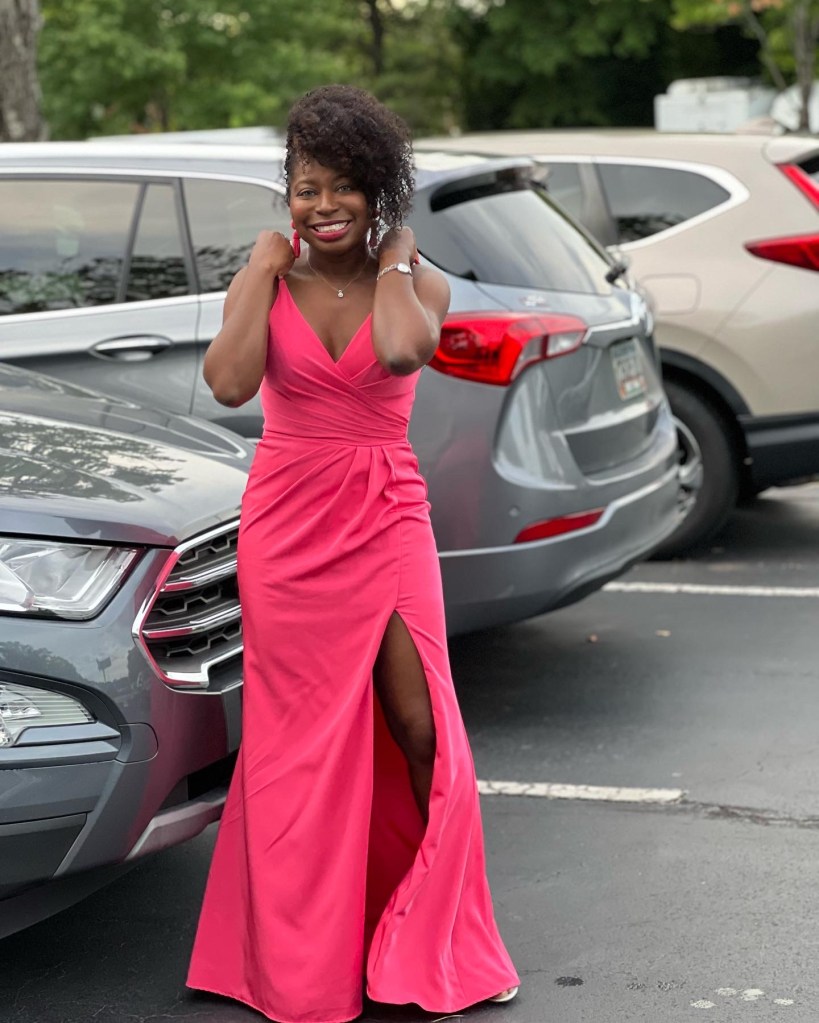
Even while living in Turkey, I stayed connected to the Yoruba community. And I’m proud to say that I was recently invited to my first Nigerian Gala in honor of the Yoruba People of North America. I attended with my beautiful daughter, and it was an incredible experience—to feel truly embraced by a group of people who welcomed us as their own.
There were no questions, no stares—just oneness. The Nigerian Consul General attended, along with other esteemed guests. We tasted traditional Nigerian dishes and connected on a deeper, soulful level.
As I sat among the Yorubas, I couldn’t help but feel a quiet sense of accomplishment, as if somewhere out there, my ancestors were smiling. My people lost so much on that transatlantic journey—many never survived or made it home. They lost their culture, their language, their land, and their families.
But through me… they are one step closer to returning home.
Now, my dear mes amies, let’s start a dialogue.
Are you living in an adopted country? What has that experience been like for you?
Can you relate to what I’ve shared here?
Have you recently reconnected with your mother’s or father’s people in a land far from your birthplace?
I’m always curious about my readers’ experiences, so feel free to drop me a line or two.
Until next time mes amies,
Stay young, stay curious & stay true,
Je suis JaTon
 Je suis JaTon